Last reviewed: 22 October 2026. General information for pharmaceutical distributors and healthcare professionals. It is not medical advice.
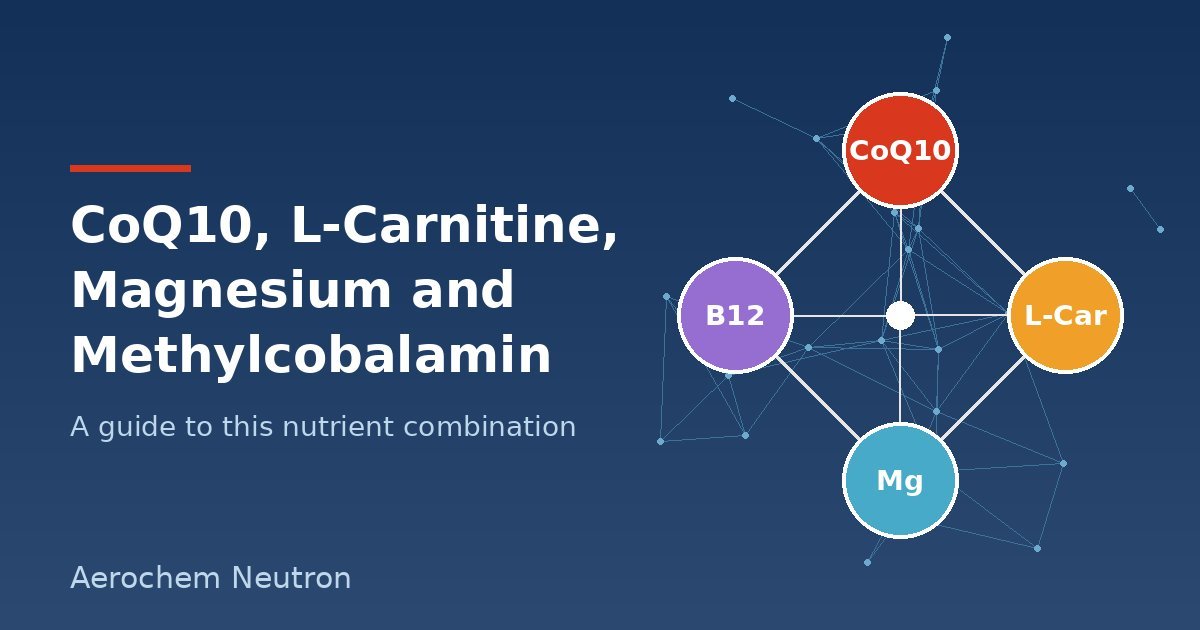
Combination tablets that pair Coenzyme Q10 with L-carnitine, magnesium and methylcobalamin (a form of vitamin B12) are now a familiar sight in Indian clinics and pharmacies. Each of the four ingredients has a well-described role in the body, and each has its own evidence base, with real strengths and clear limits.
This guide is written for two readers. Doctors will find a short, referenced summary of each nutrient: what it does, who may have low levels, what the research shows and the main safety points. Distributors and PCD franchise partners will find practical notes on the category, responsible promotion and where REMAGIN-B12 fits in the Aerochem Neutron portfolio.
This article is general information for healthcare professionals and trade partners. It is not medical advice, and it makes no claim that any product or combination treats, cures or prevents a disease.
The combination at a glance
REMAGIN-B12 is listed in the Aerochem Neutron Multivitamins and Antioxidants range. The product page lists it as follows:
- Composition: Coenzyme Q10 50mg + Magnesium Bisglycinate 175mg + L-Carnitine L-Tartrate 250mg + Methylcobalamin 750mcg
- Dosage form: Tablets
- Pack: 3 x 10 tablets
- Formulation code: AC-544
Please check the product label and pack for the regulatory category and the full prescribing or usage information before stocking or recommending it. The ingredient sections below describe each nutrient in general terms, based on published evidence. They are not claims about the effect of this product.
Coenzyme Q10 (50 mg)
What it is and what it does
Coenzyme Q10 (CoQ10, also called ubiquinone) is a substance the body makes itself. It is present in every cell, with the highest levels in the heart, liver, kidneys and pancreas (NCCIH). It is needed for basic cell functions, including energy production in the mitochondria, and is widely described as an antioxidant (Mayo Clinic).
Who may have lower levels
CoQ10 and cholesterol are made through the same pathway in the body, so statins, which block that pathway, can lower CoQ10 as well. A meta-analysis of placebo-controlled trials found a significant fall in plasma CoQ10 with atorvastatin, simvastatin, rosuvastatin and pravastatin (2015 meta-analysis), and an updated meta-analysis of 12 randomised trials reached the same conclusion (Qu et al., 2018). People with some diseases also have reduced levels (NCCIH).
What the evidence shows, and its limits
The fall in CoQ10 with statins led to the idea that supplements might ease statin-related muscle aches. The evidence does not settle this. A meta-analysis of randomised trials in Mayo Clinic Proceedings found no significant benefit of CoQ10 on statin-associated muscle pain or creatine kinase levels (Banach et al., 2015), and NCCIH states that the overall evidence does not support CoQ10 for statin muscle pain. NCCIH also describes the research on heart failure and on preventing heart disease as inconclusive, finds that CoQ10 probably has no meaningful effect on blood pressure, and notes that it did not help early Parkinson disease (NCCIH).
Safety and interactions
No serious side effects have been reported; mild insomnia or digestive upset may occur. CoQ10 may interact with warfarin and with insulin, and it may not be compatible with some cancer treatments (NCCIH).
Magnesium (as bisglycinate, 175 mg)
What it is and what it does
Magnesium is a cofactor in more than 300 enzyme systems. These include protein synthesis, muscle and nerve function, blood glucose control and blood pressure regulation. It is needed for energy production, for bone structure and for moving calcium and potassium across cell membranes, which matters for nerve conduction, muscle contraction and normal heart rhythm (NIH ODS, Magnesium). In magnesium bisglycinate, the mineral is bound to the amino acid glycine. Supplement forms differ in absorption, and labels generally state the amount of elemental magnesium, which is lower than the weight of the whole compound.
Who may have low levels
NIH ODS lists people with gut disorders such as Crohn disease and celiac disease, people with type 2 diabetes (who lose more magnesium in urine), people with alcohol dependence, and older adults. Medicines matter too. Long-term proton pump inhibitor use, typically for more than a year, can cause low serum magnesium, and loop and thiazide diuretics increase magnesium loss in urine (NIH ODS).
What the evidence shows, and its limits
Observational studies link higher magnesium intakes with a lower risk of type 2 diabetes and stroke, but these studies cannot rule out other dietary factors. In trials, supplements lowered blood pressure only marginally. The American Diabetes Association finds the evidence insufficient to recommend magnesium for glycaemic control. Neurology and headache societies consider magnesium probably effective for migraine prevention, though the data are limited (NIH ODS).
Safety and interactions
High supplemental doses can cause diarrhoea, nausea and cramping, and people with impaired kidney function are at higher risk of magnesium toxicity. The adult upper limit for supplemental magnesium is 350 mg per day. Magnesium can reduce the absorption of oral bisphosphonates and of tetracycline and quinolone antibiotics, so doses should be separated (NIH ODS).
L-Carnitine (as L-tartrate, 250 mg)
What it is and what it does
Carnitine is derived from amino acids. It carries long-chain fatty acids into the mitochondria so they can be oxidised for energy, and it helps move some toxic compounds out. About 95% of the body’s carnitine is in heart and skeletal muscle (NIH ODS, Carnitine). L-carnitine L-tartrate is a salt form commonly used in supplements.
Who may have low levels or extra need
The liver and kidneys normally make enough carnitine from lysine and methionine, so healthy people do not need it from food or supplements. Red meat is the main dietary source; a vegan diet supplies very little, although the body still makes enough for healthy needs. Low levels are seen in premature infants, in people with end-stage kidney disease on dialysis, in genetic carnitine deficiency, and with some medicines: valproic acid and other anticonvulsants reduce blood carnitine, and long-term pivalate-conjugated antibiotics can deplete it (NIH ODS).
What the evidence shows, and its limits
NIH ODS describes the research as mixed in most areas. A 2023 meta-analysis found that L-carnitine reduced fasting glucose, insulin resistance and HbA1c in adults, most of whom had conditions such as diabetes or obesity, but larger trials are needed. Results for exercise performance, heart disease, weight loss and male fertility are inconsistent (NIH ODS).
Safety and interactions
Doses of about 3 g per day can cause nausea, vomiting, cramps, diarrhoea and a fishy body odour. Gut bacteria convert some carnitine to TMAO, a compound under study for a possible link with cardiovascular risk; what this means in practice is not yet clear (NIH ODS).
Methylcobalamin (vitamin B12, 750 mcg)
What it is and what it does
Vitamin B12 is needed for the development, myelination and function of the nervous system, for healthy red blood cell formation and for DNA synthesis. Methylcobalamin is one of its two active coenzyme forms; it is the form used by methionine synthase, which converts homocysteine to methionine (NIH ODS, Vitamin B12).
Who may have low levels
B12 is found naturally only in animal foods, so people on vegetarian or vegan diets are at higher risk of deficiency. Metformin may reduce B12 absorption and lower serum B12, and proton pump inhibitors and H2 blockers can reduce absorption from food. Older adults, people with pernicious anaemia, atrophic gastritis or gut surgery, and infants of mothers on vegan diets are also at risk (NIH ODS). In India, the Comprehensive National Nutrition Survey 2016-18 found B12 deficiency in about 14% of preschool children, 17% of school-age children and 31% of adolescents (CNNS key findings; Nutrients 2023 analysis). We could not verify an official national figure for adults.
What the evidence shows, and its limits
Deficiency is diagnosed with tests, not symptoms alone: serum B12 first, with methylmalonic acid when results are borderline. A 2018 Cochrane review found low-quality evidence that very high oral doses normalised serum B12 about as well as injections. NIH ODS notes that there is no evidence that absorption differs between B12 forms. B12 supplements do not appear to improve energy or athletic performance in people with adequate B12, and trials have not shown that they prevent heart disease or cognitive decline (NIH ODS).
Safety and interactions
No upper intake level has been set for B12 because of its low potential for toxicity. People taking metformin or acid-suppressing medicines long term should discuss their B12 status with their doctor (NIH ODS).
Why these four nutrients are often combined
The reasoning behind this kind of combination is mechanistic and practical, not proof that it works:
- A shared link to cellular energy. CoQ10 is involved in mitochondrial energy production, carnitine brings fatty acids into the mitochondria, magnesium is a cofactor for energy production, and B12 supports key metabolic enzymes.
- Overlapping patient groups. The groups linked to lower levels often overlap in everyday practice. A person with type 2 diabetes may take metformin (B12), a statin (CoQ10) and a proton pump inhibitor or diuretic (magnesium and B12), and may have higher urinary magnesium loss.
- Convenience. One tablet can be simpler than several separate products.
No large clinical trials of this exact four-ingredient combination were found in our research. Any decision to use it rests on the prescriber's judgement of the individual patient, ideally guided by testing where tests are available.
Why this category matters for distributors
- Broad prescriber base. General physicians, diabetologists, cardiologists, gastroenterologists, neurologists and gynaecologists all see patients in the groups above.
- Long-term patients. Many people on metformin, statins or PPIs stay on treatment for years and are reviewed regularly.
- A fit with other ranges. A nutrient combination sits naturally beside diabetes, cardiac, PPI and digestive portfolios in the same territory.
It is also a crowded segment. Doctors respond to clear compositions and honest information, not inflated claims. Before taking on any product, check the composition, label and pack, and ask for product details in writing. Our checklist for choosing a PCD pharma franchise company covers wider due diligence.
Pricing and margins
Work out your numbers before committing to a territory. The PTR and PTS calculator helps you work back from MRP to retailer and stockist prices, and the pharma scheme calculator shows the real effect of bonus schemes such as 10+1 on your margin. Trade schemes must stay within the law and the code on promotion.
Promoting it responsibly
If you promote REMAGIN-B12 or any nutrient combination to doctors, follow the Uniform Code for Pharmaceutical Marketing Practices (UCPMP 2024, as amended on 1 September 2025):
- Claims must be balanced, verifiable and capable of substantiation (clause 1.3).
- The word “safe” must not be used without qualification, and a product must not be described categorically as having no side effects (clause 2.2).
- Keep samples, literature and engagement with doctors within the code.
For this category, the most credible message is also the safest one: what each ingredient does, who may have low levels, what the evidence does and does not show, and what is in the pack.
About Aerochem Neutron
Aerochem Neutron offers a portfolio of 250+ formulations across therapeutic categories, including antibiotics, PPI and digestive, derma, gynaecology, orthopaedic, paediatric and nutritional ranges. Production is coordinated through eligible licensed partner facilities, and we support PCD franchise partners with product information and territory planning.
Frequently asked questions
What is in REMAGIN-B12?
The product page lists Coenzyme Q10 50mg, Magnesium Bisglycinate 175mg, L-Carnitine L-Tartrate 250mg and Methylcobalamin 750mcg, as tablets in a 3 x 10 pack. Check the pack label for full details.
Do statins lower CoQ10, and does CoQ10 help statin muscle pain?
Meta-analyses of trials show that statins lower blood CoQ10. However, a meta-analysis of randomised trials found no significant benefit of CoQ10 for statin-associated muscle pain, and NCCIH says the overall evidence does not support it.
Which medicines can lower magnesium?
According to NIH ODS, long-term proton pump inhibitors and loop or thiazide diuretics can lower magnesium. Magnesium also reduces the absorption of some antibiotics and bisphosphonates, so doses should be spaced.
Do healthy people need L-carnitine?
Usually not. The liver and kidneys make enough carnitine for healthy people. Low levels occur in specific situations such as dialysis, some genetic disorders and certain anticonvulsant medicines.
Does metformin lower vitamin B12, and is methylcobalamin better than other forms?
NIH ODS notes that metformin may reduce B12 absorption and lower serum B12. Methylcobalamin is an active form, but NIH ODS states there is no evidence that absorption differs by form.
Is this combination proven to work?
Each ingredient has its own evidence base, summarised above. We found no large trials of this exact four-ingredient combination, so its use is a matter of clinical judgement.
Is REMAGIN-B12 available for PCD franchise in my district?
Territory availability depends on existing partners. Use the button below to check your area.
Check your territory
Interested in adding REMAGIN-B12 and the wider nutritional range to your portfolio?
Check PCD Franchise Territory Availability
Have a question about a specific product? Contact our team.
Sources
- National Center for Complementary and Integrative Health (NIH). Coenzyme Q10. https://www.nccih.nih.gov/health/coenzyme-q10
- Statin therapy and plasma coenzyme Q10 concentrations: a systematic review and meta-analysis of placebo-controlled trials (2015). PubMed 26192349. https://pubmed.ncbi.nlm.nih.gov/26192349/
- Qu H, et al. The effect of statin treatment on circulating coenzyme Q10 concentrations: an updated meta-analysis of randomized controlled trials. Eur J Med Res 2018. https://pmc.ncbi.nlm.nih.gov/articles/PMC6230224/
- Banach M, et al. Effects of coenzyme Q10 on statin-induced myopathy: a meta-analysis of randomized controlled trials. Mayo Clin Proc 2015;90(1):24-34. https://doi.org/10.1016/j.mayocp.2014.08.021
- NIH Office of Dietary Supplements. Magnesium: Fact Sheet for Health Professionals (updated 6 January 2026). https://ods.od.nih.gov/factsheets/Magnesium-HealthProfessional/
- NIH Office of Dietary Supplements. Carnitine: Fact Sheet for Health Professionals (updated 17 April 2023). https://ods.od.nih.gov/factsheets/Carnitine-HealthProfessional/
- NIH Office of Dietary Supplements. Vitamin B12: Fact Sheet for Health Professionals (updated 2 July 2025). https://ods.od.nih.gov/factsheets/VitaminB12-HealthProfessional/
- Ministry of Health and Family Welfare, UNICEF, Population Council. Comprehensive National Nutrition Survey 2016-18: Key Findings. https://healthnutritionindia.in/reports/documents/15/2019-10-10-CNNS-Key-Findings.pdf
- Prevalence of Vitamin B12 and Folate Deficiencies in Indian Children and Adolescents. Nutrients 2023;15(13):3026. https://pmc.ncbi.nlm.nih.gov/articles/PMC10346745/
- Mayo Clinic News Network. Mayo Clinic Q and A: Statin use does not always mean coenzyme Q10 supplement is needed. https://newsnetwork.mayoclinic.org/discussion/mayo-clinic-q-and-a-statin-use-doesnt-always-mean-coenzyme-q10-supplement-is-needed/
- Department of Pharmaceuticals. Uniform Code for Pharmaceutical Marketing Practices 2024, consolidated text “Updated as on 1.9.2025”, Circular No. 3 of 2025. https://ucmp.pharma-dept.gov.in/Pharma/UCPMP%202024%20for%20website_0.pdf