Last reviewed: 22 October 2026. General information for pharmaceutical distributors and healthcare professionals. It is not medical advice. This product is not intended to diagnose, treat, cure or prevent any disease.
CoQ10 is rarely sold on its own anymore. Many products in Indian pharmacies now pair it with half a dozen other nutrients, and the label on the back of the strip carries a lot of information: amounts per tablet, percentages of the recommended daily allowance (RDA), regulatory statements and warnings. Doctors, chemists and distributors who can read that label confidently are in a better position to answer questions honestly.
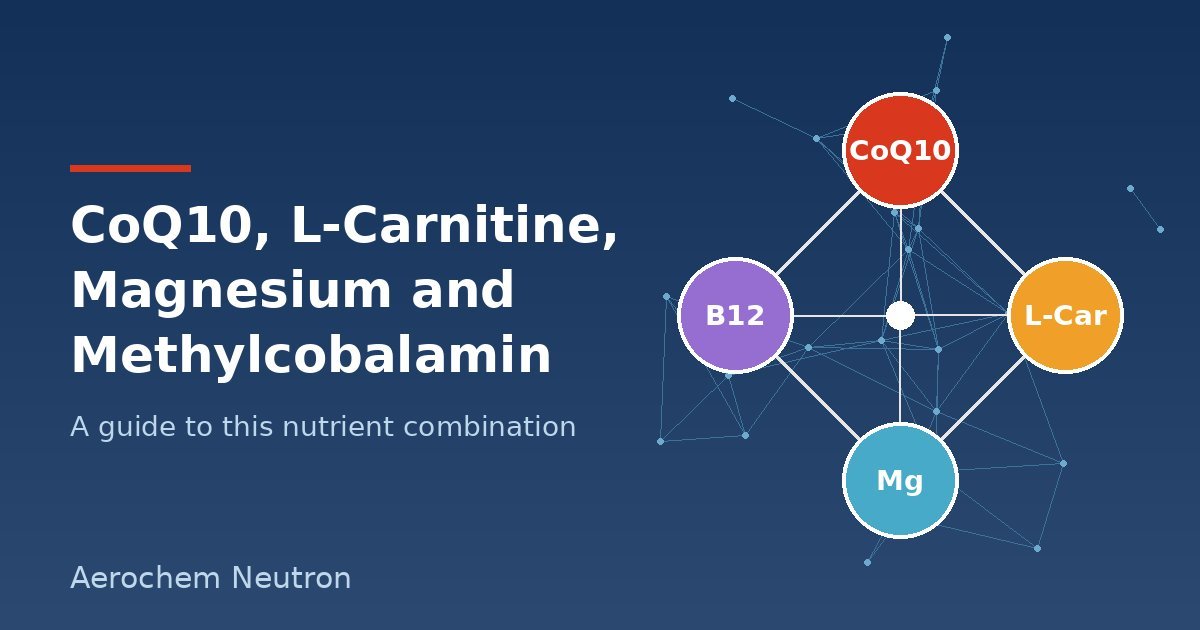
This guide uses the approved label of ACDC Co-Q 10, an FSSAI-licensed dietary supplement marketed by Aerochem Neutron, as a worked example. It explains what each of its seven ingredients is, what the evidence shows, where the evidence is limited, and which safety points matter most. If you want a deeper look at CoQ10, L-carnitine and magnesium on their own, see our earlier guide to the CoQ10, L-carnitine, magnesium and methylcobalamin combination. This article summarises those three and spends more time on the other four.
This article is general information for healthcare professionals and trade partners. It is not medical advice. As the product label itself states, this product is not intended to diagnose, treat, cure or prevent any disease.
What the label says
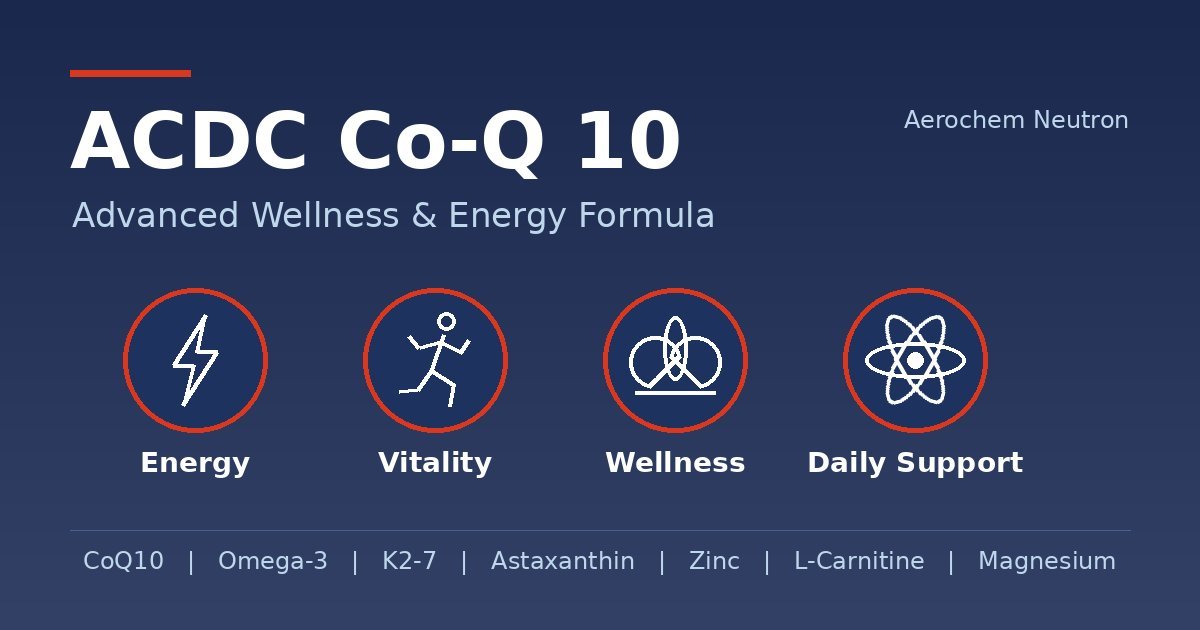
The approved pack artwork for ACDC Co-Q 10 (“Advanced Wellness & Energy Formula”) lists, per tablet:
| Ingredient (as labelled) | Per tablet | % RDA on label |
|---|---|---|
| L-Carnitine | 500 mg | No RDA established by ICMR |
| Omega-3 Fatty Acids | 100 mg | No RDA established by ICMR |
| Magnesium Glycinate | 50 mg | 2.84% |
| Coenzyme Q10 | 50 mg | No RDA established by ICMR |
| Vitamin K2-7 | 50 mcg | 90.90% |
| Astaxanthin 10% | 8 mg | No RDA established by ICMR |
| Zinc Sulphate | 7.5 mg | 20.68% |
The label also states:
- Serving: 1 tablet, as directed by a health professional. Do not exceed the recommended dose.
- RDA percentages are calculated on ICMR guidelines for men doing moderate work.
- “Not for Medical Use. Dietary Supplement”, with an FSSAI licence number.
- “This product is not intended to diagnose, treat, cure or prevent any disease.”
The product sits in the Aerochem Neutron Multivitamins and Antioxidants range and is supplied as 3 x 10 tablets.
How to read an Indian nutraceutical label
Under FSSAI’s regulations for health supplements and nutraceuticals, these products must carry the statement “NOT FOR MEDICINAL USE”, the recommended usage level, a “not to exceed the recommended daily usage” warning, a warning to keep the product out of reach of children, any known precautions or interactions, and the quantity of nutrients as a percentage of the relevant RDA where one exists. The regulations also require that any combination of ingredients be based on available scientific and technical evidence (FSSAI direction on nutraceutical regulations).
Three practical points follow for anyone reading a label like this one:
- A % RDA only exists for some nutrients. Here only magnesium, vitamin K and zinc have an ICMR RDA. CoQ10, L-carnitine, omega-3s and astaxanthin do not, so the label cannot show a percentage for them.
- Compound weight is not mineral weight. “Zinc Sulphate 7.5 mg” and “Magnesium Glycinate 50 mg” are the weights of the compounds, not of elemental zinc or magnesium (NIH ODS, Zinc; NIH ODS, Magnesium). The % RDA figure is the better guide to how much of the mineral the tablet provides.
- Percentages depend on the reference group. This label uses the ICMR values for adult men doing moderate work. For women, older adults or other groups, the percentage will differ.
Vitamin K2-7 (50 mcg)
What it is. Vitamin K is a family of compounds. Vitamin K1 (phylloquinone) comes mainly from green leafy vegetables, while vitamin K2 (menaquinones) comes from fermented and animal foods and gut bacteria. MK-7 is one of the best-studied menaquinones (NIH ODS, Vitamin K).
Role in the body. Vitamin K is a coenzyme for an enzyme needed to make proteins involved in blood clotting and bone metabolism, including prothrombin and osteocalcin.
Who may have low levels. Clinically significant deficiency in adults is very rare and is usually limited to people with malabsorption (such as celiac disease or cystic fibrosis), people who have had bariatric surgery, and those taking drugs that interfere with vitamin K. Long-term antibiotics, bile acid sequestrants and orlistat can also lower vitamin K status (NIH ODS).
What the evidence shows. Findings on bone are mixed. A 2006 meta-analysis found fewer fractures with high-dose MK-4 (45 mg/day, a pharmacological dose used in Japan), and one trial of MK-7 at 180 mcg/day reported less bone loss in postmenopausal women, but other trials found no effect on bone density. Its role in arterial calcification and heart disease is still unclear (NIH ODS).
Safety. No upper limit has been set because toxicity potential is low. The key point is the interaction with warfarin and similar anticoagulants: sudden changes in vitamin K intake can change their effect, so people on these medicines need consistent vitamin K intake and should consult their doctor before starting any vitamin K-containing product. The ACDC Co-Q10 product page carries the same precaution.
Omega-3 Fatty Acids (100 mg)
What they are. The main omega-3s are ALA from plant oils, and EPA and DHA, which come from fish, fish oil, krill oil and algal oil (NIH ODS, Omega-3).
Role in the body. Omega-3s are structural parts of cell membranes, with DHA especially concentrated in the retina and brain. They also give rise to signalling molecules involved in cardiovascular, immune and other functions.
Who may have low intakes. Classical essential fatty acid deficiency is virtually nonexistent in healthy people. Intakes of EPA and DHA depend largely on how much oily fish a person eats, so vegetarians who eat no fish get very little of them from food (NIH ODS).
What the evidence shows. Large trials of 1 g/day omega-3 supplements (VITAL, ASCEND, ORIGIN) did not reduce their main cardiovascular endpoints. A 2020 Cochrane review found that omega-3 supplements lowered triglycerides by about 15% and slightly reduced cardiovascular deaths and coronary events, but did not affect overall mortality, stroke or cardiovascular events. The American Heart Association does not recommend omega-3 supplements for people without high cardiovascular risk (NIH ODS). For context, a typical fish oil capsule provides about 300 mg of EPA plus DHA. The 100 mg of omega-3s in this tablet is well below the doses used in those trials.
Safety. Side effects are usually mild: fishy taste, heartburn, nausea or loose stools. High doses can prolong bleeding time, and two large trials at 4 g/day found a small increase in atrial fibrillation in high-risk patients. The label does not state the EPA and DHA split or the source oil; distributors should ask the company for this, especially if vegetarian customers ask.
Astaxanthin 10% (8 mg)
What it is. Astaxanthin is a red keto-carotenoid made by certain microalgae and bacteria. It gives salmon and shrimp their colour (Ng et al., J Diet Suppl 2021).
Role in the body. Astaxanthin is not an essential nutrient, and no RDA exists for it. It is studied mainly for its antioxidant activity.
What the evidence shows. A systematic review of 11 clinical studies on skin found improvements in texture, wrinkles and moisture in several trials, but the studies were small, mostly in healthy Japanese women, and many were funded by industry (Ng et al.). A review of trials on cognition found subjective improvements but no statistically supported benefit (systematic review, 2024). The evidence is early and does not support disease claims.
Safety. A safety review of 87 human studies found no safety concerns with natural astaxanthin, including 35 studies at 12 mg/day or more (Brendler and Williamson, Phytother Res 2019). The European Food Safety Authority concluded that 8 mg/day from food supplements is safe for adults, but that adolescents aged 14 to 17 reach the acceptable daily intake and younger children exceed it (EFSA, 2020).
Reading this line. “Astaxanthin 10% 8 mg” usually describes an ingredient standardised to 10% astaxanthin. Whether the 8 mg is the weight of that ingredient or of astaxanthin itself is not stated on the label, so ask the company before quoting a figure.
Zinc Sulphate (7.5 mg, 20.68% RDA)
What it is. Zinc is an essential mineral, and zinc sulphate is one of the common forms in supplements (NIH ODS, Zinc).
Role in the body. Zinc is needed for the activity of hundreds of enzymes and is involved in immune function, protein and DNA synthesis, wound healing, cell division, growth and the sense of taste.
Who may have low levels. NIH ODS lists people with gut disorders such as inflammatory bowel disease or celiac disease, people who have had bariatric surgery, people on vegetarian or vegan diets (phytates in legumes and whole grains reduce zinc absorption), pregnant and breastfeeding women, older infants who are exclusively breastfed, and people with alcohol use disorder. Zinc deficiency is much more common in low- and middle-income countries.
What the evidence shows. Zinc lozenges may shorten colds by about two days but do not appear to prevent them. Zinc supplementation shortens acute diarrhoea in children in low-income settings, and WHO and UNICEF recommend it for that purpose. Evidence on type 2 diabetes is insufficient for firm conclusions (NIH ODS). These findings come from specific doses and settings and are not claims for this product.
Safety and interactions. The adult upper limit is 40 mg of zinc per day. Doses of 50 mg or more for weeks can reduce copper absorption. Zinc can reduce absorption of quinolone and tetracycline antibiotics and of penicillamine, so doses should be separated, and thiazide diuretics increase zinc loss in urine (NIH ODS).
Coenzyme Q10 (50 mg)
CoQ10 is made by the body and is involved in mitochondrial energy production. Statins can lower blood CoQ10, but trials have not shown that CoQ10 supplements ease statin-related muscle pain, and most other research is inconclusive. CoQ10 may interact with warfarin and insulin (NCCIH). Our Blog #4 covers the CoQ10 evidence, including the statin meta-analyses, in more detail.
L-Carnitine (500 mg)
L-carnitine carries long-chain fatty acids into the mitochondria for energy. The liver and kidneys normally make enough for healthy people. Low levels occur with dialysis, some genetic disorders, valproic acid and other anticonvulsants, and long-term pivalate-containing antibiotics. Research on exercise, weight, heart health and blood sugar is mixed. Doses around 3 g/day can cause digestive upset and a fishy body odour (NIH ODS, Carnitine). The 500 mg here is well below that level. See Blog #4 for more.
Magnesium Glycinate (50 mg, 2.84% RDA)
Magnesium is a cofactor in more than 300 enzyme systems, including those for energy production and muscle and nerve function. People with type 2 diabetes, gut disorders or alcohol dependence, older adults, and people on long-term proton pump inhibitors or loop and thiazide diuretics are more likely to have low levels. Magnesium can reduce absorption of some antibiotics and bisphosphonates (NIH ODS, Magnesium). At 2.84% of the RDA, this tablet provides only a small amount of magnesium, so it should not be presented as a magnesium supplement.
Putting the seven together: rationale, not proof
Why combine these nutrients? The reasoning is mechanistic: CoQ10, L-carnitine and magnesium are each involved in energy metabolism; omega-3s are membrane components; astaxanthin and zinc are discussed for antioxidant roles; and vitamin K is involved in bone proteins. That is a description of roles, not evidence that the combination works. We found no clinical trials of this exact seven-ingredient formula. FSSAI requires that ingredient combinations be based on available scientific and technical evidence, which the company should be able to provide on request.
Safety checklist for prescribers and chemists
- Anticoagulants: vitamin K2 (and, at much higher doses, omega-3s and CoQ10) can affect warfarin therapy. Patients on warfarin should consult their doctor first.
- Antibiotics: zinc and magnesium can reduce absorption of quinolones and tetracyclines. Separate the doses.
- Children, pregnancy and lactation: the label is based on adult male RDAs. Seek medical advice for other groups.
- Do not exceed one tablet a day unless a health professional advises otherwise, and remember that patients may already be taking other supplements containing zinc or vitamin K.
Why this matters for distributors
Multinutrient wellness products are a large and competitive segment. Doctors in orthopaedics, cardiology, diabetology and general practice are often asked about them, and the distributors who win their trust are the ones who explain labels accurately rather than repeating marketing language. Before stocking any nutraceutical, check the FSSAI licence on the pack, the label composition and the % RDA figures, and ask for the product file in writing. Our checklist for choosing a PCD pharma franchise company covers the wider due diligence.
Pricing and margins
Work out your numbers before committing to a territory. The PTR and PTS calculator helps you work back from MRP to retailer and stockist prices, and the pharma scheme calculator shows the real effect of bonus schemes on your margin.
Promoting it responsibly
Because ACDC Co-Q 10 is an FSSAI-licensed dietary supplement, its label and claims fall under FSSAI rules, including the “not for medicinal use” requirement. When you discuss it with doctors, also follow the principles of the Uniform Code for Pharmaceutical Marketing Practices (UCPMP 2024, as amended on 1 September 2025):
- Keep claims balanced, verifiable and capable of substantiation (clause 1.3).
- Do not use the word “safe” without qualification, and never describe a product as having no side effects (clause 2.2).
- Do not present a supplement as a treatment for any disease. The label says it is not intended to diagnose, treat, cure or prevent any disease.
About Aerochem Neutron
Aerochem Neutron offers a portfolio of 250+ formulations across therapeutic categories, including antibiotics, PPI and digestive, derma, gynaecology, orthopaedic, paediatric and nutritional ranges. Production is coordinated through eligible licensed partner facilities, and we support PCD franchise partners with product information and territory planning.
Frequently asked questions
What is in ACDC Co-Q 10?
Per tablet, the approved label lists L-Carnitine 500 mg, Omega-3 Fatty Acids 100 mg, Magnesium Glycinate 50 mg, Coenzyme Q10 50 mg, Vitamin K2-7 50 mcg, Astaxanthin 10% 8 mg and Zinc Sulphate 7.5 mg. It is labelled as an FSSAI-licensed dietary supplement, not for medicinal use.
Why do only three ingredients show a % RDA?
ICMR has set RDAs for magnesium, vitamin K and zinc, but not for CoQ10, L-carnitine, omega-3s or astaxanthin. The label percentages are based on adult men doing moderate work.
Can patients on warfarin take a product with vitamin K2?
Vitamin K can change the effect of warfarin, so people on warfarin need consistent vitamin K intake. They should consult their treating doctor before starting any product containing vitamin K2.
Is 100 mg of omega-3 the same as a fish oil capsule?
No. A typical fish oil capsule provides about 300 mg of EPA plus DHA, and the large cardiovascular trials used 1 g/day or more. The label does not state the EPA and DHA split.
Is astaxanthin safe?
A review of 87 human studies found no safety concerns with natural astaxanthin, and the European Food Safety Authority considers 8 mg/day from supplements safe for adults, though not for children and adolescents. Clinical evidence for specific benefits is still limited.
Does this product treat any disease?
No. The label states that it is not intended to diagnose, treat, cure or prevent any disease.
Is ACDC Co-Q 10 available for PCD franchise in my district?
Territory availability depends on existing partners. Use the button below to check your area.
Check your territory
Interested in adding ACDC Co-Q 10 and the wider nutritional range to your portfolio?
Check PCD Franchise Territory Availability
Have a question about a specific product? Contact our team.
Sources
- NIH Office of Dietary Supplements. Vitamin K: Fact Sheet for Health Professionals (updated 29 March 2021). https://ods.od.nih.gov/factsheets/VitaminK-HealthProfessional/
- NIH Office of Dietary Supplements. Omega-3 Fatty Acids: Fact Sheet for Health Professionals. https://ods.od.nih.gov/factsheets/Omega3FattyAcids-HealthProfessional/
- NIH Office of Dietary Supplements. Zinc: Fact Sheet for Health Professionals (updated 6 January 2026). https://ods.od.nih.gov/factsheets/Zinc-HealthProfessional/
- NIH Office of Dietary Supplements. Magnesium: Fact Sheet for Health Professionals (updated 6 January 2026). https://ods.od.nih.gov/factsheets/Magnesium-HealthProfessional/
- NIH Office of Dietary Supplements. Carnitine: Fact Sheet for Health Professionals (updated 17 April 2023). https://ods.od.nih.gov/factsheets/Carnitine-HealthProfessional/
- National Center for Complementary and Integrative Health. Coenzyme Q10. https://www.nccih.nih.gov/health/coenzyme-q10
- Ng QX, et al. Effects of Astaxanthin Supplementation on Skin Health: A Systematic Review of Clinical Studies. J Diet Suppl 2021;18(2):169-182. https://pubmed.ncbi.nlm.nih.gov/32202443/
- Astaxanthin and improvement of dementia: A systematic review of current clinical trials. Cerebral Circulation - Cognition and Behavior, 2024. https://pmc.ncbi.nlm.nih.gov/articles/PMC11260299/
- Brendler T, Williamson EM. Astaxanthin: How much is too much? A safety review. Phytother Res 2019;33:3090-3111. https://doi.org/10.1002/ptr.6514
- EFSA NDA Panel. Safety of astaxanthin for its use as a novel food in food supplements. EFSA Journal 2020. https://pmc.ncbi.nlm.nih.gov/articles/PMC7448075/
- FSSAI. Direction under Section 16(5) on the Food Safety and Standards (Health Supplements, Nutraceuticals, Food for Special Dietary Use, Food for Special Medical Purpose, Prebiotic and Probiotic Food) Regulations, 30 March 2022. https://fssai.gov.in/upload/advisories/2022/03/6243ef28079ceDirection_Nutra_30_03_2022.pdf
- Department of Pharmaceuticals. Uniform Code for Pharmaceutical Marketing Practices 2024, consolidated text “Updated as on 1.9.2025”, Circular No. 3 of 2025. https://ucmp.pharma-dept.gov.in/Pharma/UCPMP%202024%20for%20website_0.pdf